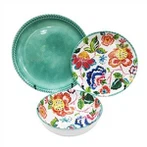
Melamine dinner set are different from each other
The common porcelain imitation dishes on the market are classified into A1, A3, A5 and A8 according to the ratio of plasticizer and amine resin.

A1 and A3 Miamines.
The content of the amine resin is low and the content of plasticizer is high, so A1 and A3 amines can not be used in tableware, they are very toxic, and they are not resistant to high temperature and corrosion, and will precipitate formaldehyde at higher temperatures, especially when serving hot soup, formaldehyde will directly dissolve into it.
Toxic more a poor quality imitation porcelain tableware, is the use of urea-formaldehyde resin to counterfeit amine resin. This material will decompose at 80 ℃ to release formaldehyde gas, so in the national standard is not allowed to contact food directly.
A5 and A8 milamine.
ꔷ Different uses
A5 dense amine: cannot be used for imitation porcelain tableware, the product is not dirty, easy to change color and fade.
A8 dense amine: can be used for imitation porcelain tableware, beautiful appearance, light and heat preservation, safe to use.
ꔷ Different ingredients
A5 amine: 70% amine resin and 30% additives, starch, etc.
A8 amine: 100% amine resin, non-toxic and odorless.
In the range of -30℃~150℃, the amount of formaldehyde released from the qualified pvc tableware is insignificant and will not affect human health. So pay attention to the temperature when using, do not use to heat.

Recommendation:
When you buy imitation porcelain tableware, A1, A3, A5 and A8 are not easy to distinguish by the naked eye, so it is safer to buy through the regular way (such as supermarkets, shopping malls), and remember not to catch the cheap ones to buy.